


Did you know that the FSC publishes to Rocky Shore Trail? Find out more.
With the great diversity of species representing the range of invertebrate groups on the shore there is a wide diversity of potential ways that food can be obtained. Here is a small selection.
| Filter Feeder: mussels (right), sea-squirts, sponges | 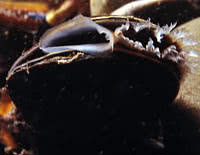 |
By drawing seawater into body, extracting food particles (plankton and detritus) and then ejecting water |
| Filter Feeder: barnacles (right), tubeworms, sea-mats | 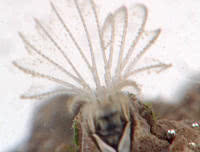 |
Filter-feed by using some form of feeding apparatus to catch food particles (plankton and detritus) in the water. The barnacle here has hairy legs. |
| Grazing Herbivores: limpets, topshells (right), periwinkles | 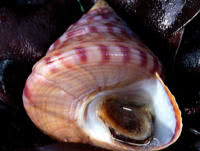 |
These use a radula (a long ribbon-like toothed tongue) to scrape up algae, lichens and detritus |
| Detritivores: prawns (right), shrimps, sandhoppers | 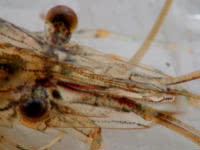 |
Eat the remains of dead animals and plants and large plankton. |
| Carnivores: anemones | 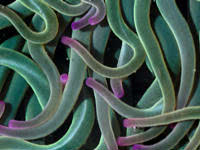 |
Use stinging tentacles (rows of nematocysts or sting cells on tentacles) to catch and paralyse prey. Eat most small animals they can catch, such as blennies, prawns, crabs and sandhoppers |
| Carnivorous molluscs: dogwhelks | 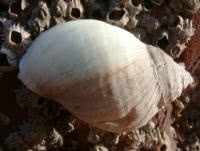 |
These bore holes in the shells of other animals, secrete digestive enzymes and suck out the digested juice. Eat mainly barnacles, limpets and mussels but will also eat tubeworms, topshells, winkles and even other dogwhelks. |
| Carnivorous molluscs: sea -slugs | 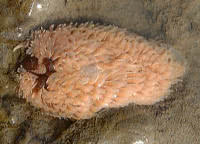 |
Carnivores which will eat animals many other animals find distateful, such as sea-mat, anemones and sea squirts . Grey Sea-slug, left, eats anemones and transports the sting cells into its cerata to use for defence |
| Carnivorous fish: blennies | 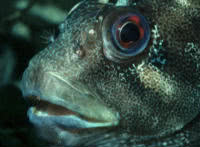 |
These have strong jaws and "teeth" to catch and crush prey. They eat most things including barnacles, crabs, prawns, molluscs and sandhoppers. It will even eat seaweed. |
| Carnivores: crabs | 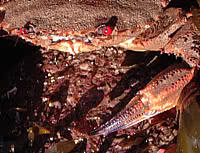 |
These important predators eat almost things especially topshells, winkles, limpets, dogwhelks, sandhoppers, prawns, blennies, barnacles and other crabs. They will scavenge on dead matter. |
| Seabird predators: gulls, oystercatcher (right), turnstones | 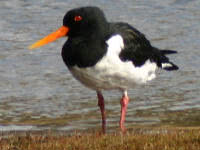 |
These are the top-carnivores and eat most tasty animals on the shore, avoiding sponges, anemones, sea slugs and the smaller colonies like sea-mat |
Looking for a next step?
The FSC offers a range of publications, courses for schools and colleges and courses for adults, families and professionals that relate to the seashore environment. Why not find
out more about the FSC?

FEEDBACK
Do you have any questions?
Copyright © 2008 Field Studies Council

Creative Commons Attribution-Noncommercial-No Derivative Works 3.0 Licence .
Site Statistics by Opentracker